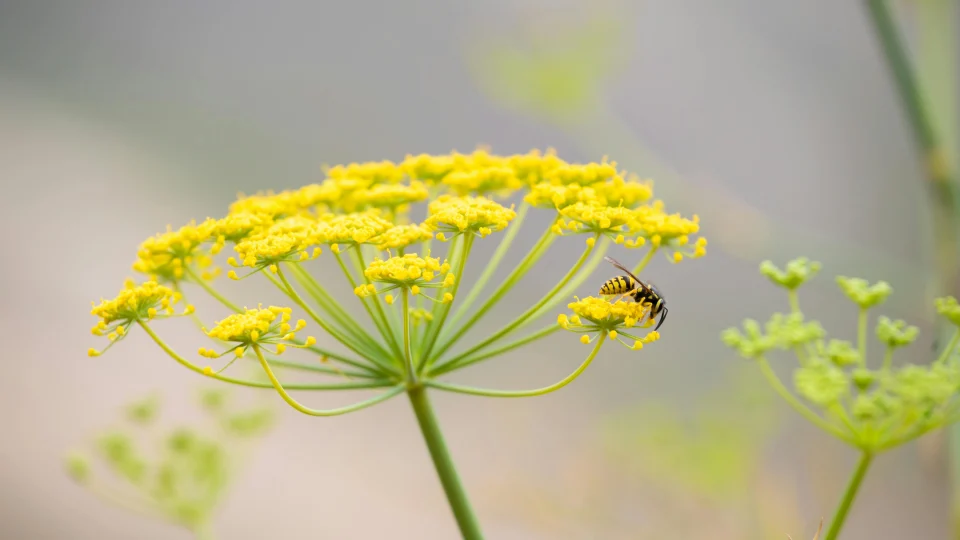
Understanding Wasps Role in Home Gardens
Wasps consume more than 2 pounds of insects within their territory, serving as key predators against pests like aphids and the emerald ash borer, which can destroy ash trees. While often viewed negatively due to encounters with yellowjackets near outdoor drinks, wasps also act as beneficial pollinators comparable to bees and butterflies. They favor nectar-rich, shallow flowers accessible via their short proboscis, as well as plants that lure their prey. Recent gardening insights highlight 12 plants commonly attracting these insects to yards and gardens, offering gardeners options to either encourage or deter them based on needs like allergy concerns.
Key Plants Attracting Wasps
Gardeners may encounter increased wasp activity from these nectar-providing perennials and herbs, which feature clustered, shallow blooms in yellows and whites that wasps detect well in their ultraviolet-focused vision.
- Queen Anne’s Lace (Daucus carota): This Apiaceae family member presents clusters of small white flowers with easy-access nectar, mimicking a single large bloom but comprising many tiny ones.
- Fleabane (Erigeron philadelphicus): A short-lived perennial in the Asteraceae family, it draws wasps to its white-petaled, yellow-centered flowers despite myths of flea-repelling properties; it also attracts other pollinators.
- Black-eyed Susans: Bright yellow petals and a central “eye” containing up to 200 individual flowers create a nectar buffet, appealing to wasps’ preference for yellow hues.
- New England Asters: Growing up to 7 feet tall, these purple perennials with yellow centers attract wasps for nectar, while caterpillars feed on leaves and birds consume seeds.
- Boneset (Eupatorium perfoliatum): Clustered white flowers provide shallow nectar access; historically linked to medicinal uses for bone ailments, it supports wasps preying on pests like Japanese beetles.
Additional Attractors and Considerations
Beyond the initial list, several more plants contribute to wasp presence through nectar, color, and prey attraction, influencing garden ecosystems.
- Fewflower Milkweed (Asclepias lanceolata): Orange blooms in bunches offer sugary nectar; its toxic milky sap deters most animals but not monarch caterpillars, with wasps focusing on flowers.
- Beargrass (Eryngium yuccifolium), also known as rattlesnake master: White globe flowers lure wasps and other pollinators; Native Americans used it medicinally, though snakebite efficacy is unclear; it hosts stemborer moth larvae.
- Golden Alexander (Zizia aurea): Yellow clusters up to 3 inches wide provide ample nectar; recognized as North Carolina’s 2012 wildflower of the year for its appeal.
- Goldenrod (Solidago spp.): A late-summer to fall bloomer in the daisy family, its yellow flowers supply nectar when other sources dwindle, benefiting wasps and bees alike.
- Cilantro (Coriandrum sativum): When bolting, it produces small white flower clusters ideal for wasps; companion planting with marigolds or mint may reduce attraction.
- Bee Balm (Monarda spp.): High-calorie blooms draw wasps for nectar and prey like aphids and beetles; it also attracts bumblebees, carpenter bees, and non-territorial solitary wasps such as the great black wasp.
- Fennel (Foeniculum vulgare): Yellow, shallow flowers with sweet nectar and prey potential make it a favorite; its seeds season foods, but it self-seeds aggressively, potentially overtaking beds.