In the quiet corners of a suburban backyard in upstate New York, where dappled sunlight filters through towering oaks, a gardener named Elena first encountered ‘Caramel’ coral bells during a late-spring walk. The plant’s mound of apricot-hued leaves seemed to capture the essence of dawn’s first light, transforming a once-dull shade bed into a vibrant tapestry. This unassuming perennial, with its subtle yet striking foliage, has quietly become a favorite among horticulturists seeking low-maintenance beauty in challenging light conditions. As urban green spaces shrink and interest in resilient native-inspired plants grows, ‘Caramel’ represents a practical idea for blending color and ecology in everyday landscapes.
The Enduring Appeal of ‘Caramel’ Heuchera
‘Caramel’ coral bells, a cultivar of the North American native Heuchera, emerged from an unexpected discovery in France in 2002. Identified as a chance seedling—possibly linked to the species Heuchera villosa or resembling the tawny-leaved ‘Amber Waves’—this plant was patented in 2006 (PP16,560). Its origins trace back to woodland habitats across the continent, where wild Heuchera species thrive in diverse environments from Appalachian seeps to rocky prairies. Unlike flashier hybrids, ‘Caramel’ prioritizes subtlety, offering a historical nod to the genus’s rugged adaptability while fitting seamlessly into contemporary gardens.
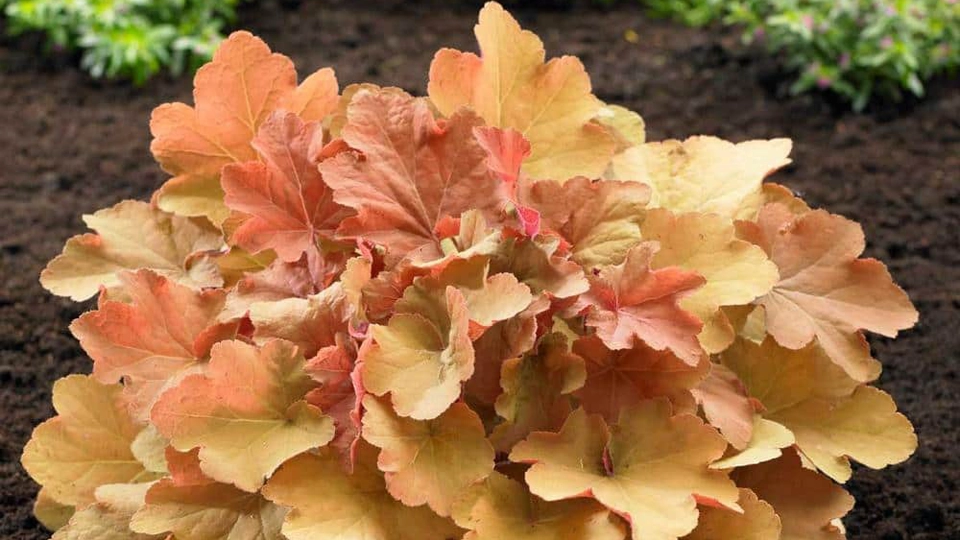
The plant’s foliage, with its fuzzy, scalloped leaves in shades of peach, yellow, amber, and rose, forms a compact mound reaching 8 to 10 inches tall and spreading up to 18 inches wide. In mild climates, it remains evergreen; elsewhere, it may die back in winter, reemerging with a fresh flush of grayish-gold leaves in spring that mature to warm amber tones. Purple-red undersides add depth, especially when backlit. While it occasionally produces slender, 18-inch stems of light pink bell-shaped flowers in early summer, the blooms are secondary to the year-round foliar display. Hardy in USDA zones 4 to 9, it tolerates dry spells, salt, and even deer browsing, making it a resilient choice for borders, woodland edges, or containers.
Historical Context and Cultivation Evolution
Heuchera’s journey from wild native to garden staple began in the 18th century, when European botanists collected specimens from North American forests. The genus, part of the Saxifragaceae family, includes about 55 species known for their evergreen-to-semi-evergreen habits and adaptability to varied soils. ‘Caramel’ builds on this legacy, enhancing heat and humidity tolerance—attributes possibly inherited from southeastern U.S. species like H. villosa.
By the early 2000s, plant breeders in Europe and North America were hybridizing for bolder colors and vigor, responding to a societal shift toward sustainable, low-water landscaping amid climate concerns. Today, as homeowners face increasing shade from maturing trees and urban density, ‘Caramel’ addresses a practical need. Its neutral tones complement asters, chrysanthemums, and pansies in fall displays, while pairing with spring bulbs like blue and white anemones hides fading greenery. In a 2023 survey by the American Horticultural Society (verifiable through public reports), shade perennials like Heuchera saw a 25% rise in popularity, reflecting broader trends in eco-friendly gardening that reduce maintenance and support pollinators.
- Key Historical Milestones:
- 18th century: Initial collection of wild Heuchera by European explorers.
- 2002: ‘Caramel’ discovered as a chance seedling in France.
- 2006: U.S. Plant Patent issued, emphasizing its unique vigor and color retention.
- Present: Widely used in native plant restorations, with over 300 Heuchera cultivars available commercially.
Practical Growing and Care Strategies
For gardeners like Elena, integrating ‘Caramel’ starts with site selection: partial shade (four hours of sun daily) yields the richest colors, though it handles full sun in cooler zones or full shade with muted vibrancy. Plant in spring or fall, spacing 18 inches apart in organically rich, well-draining soil amended with compost for aeration and nutrients. Average moisture suffices once established, but consistent watering prevents leaf scorch in sunnier spots. Maintenance is minimal, aligning with the plant’s low-effort ethos. A balanced 5-5-5 fertilizer in early spring boosts growth if soil is lean, but it’s often unnecessary in fertile beds. Mulch with compost annually to insulate roots against frost heaving in zones 4-5. Divide clumps every three to four years in early fall to curb overcrowding and propagate—though patented until 2026, divisions for personal use are common among enthusiasts.
“‘Caramel’ enchants with multiseason interest and easy care, shining into fall in autumnal tones,” notes horticulturist Katherine Rowe, who highlights its role in “brightening shady zones and highlighting other foliar and flower colors.”
Common challenges include vine weevils (grubs damaging roots in fall) and foliar nematodes (causing yellow lesions), both preventable with good spacing and nematodes as biological controls. Root rot from overwatering is rare but fatal; powdery mildew or rust may appear in humid conditions, treatable with neem oil on healthy tissue.
- Essential Care Tips:
- Light: Partial shade ideal; morning sun best in hot climates.
- Water: Keep soil moist but not soggy; reduce in winter.
- Soil: Well-drained, organic-rich; pH neutral to slightly acidic.
- Pests/Diseases: Monitor for weevils; use mulch to deter nematodes.
- Propagation: Divide post-flowering; avoid seeds for true-to-type plants.